Ordinary duplicate
A separate copy that does not inherit later edits to the original.
Optional Figma guide
Reuse a design part and understand how copies change.
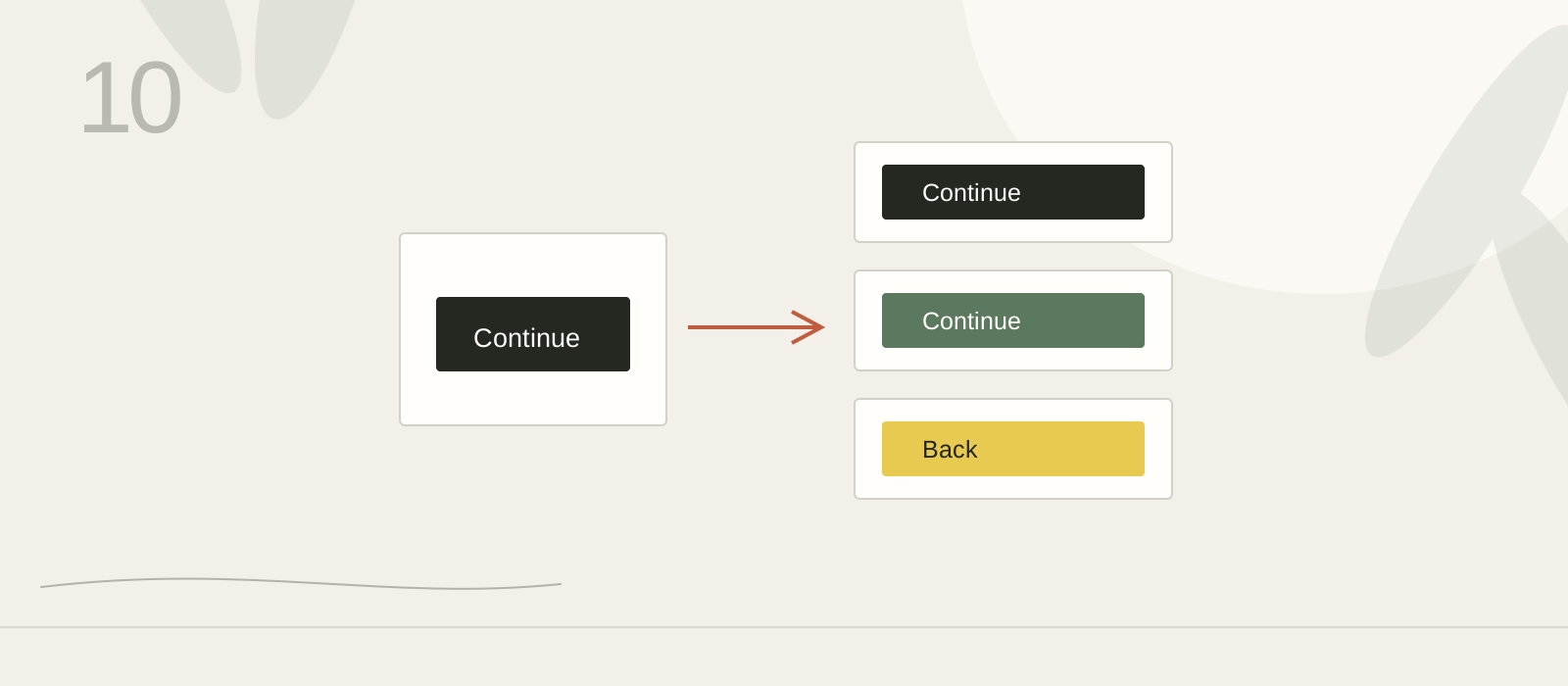
Explain the difference between an ordinary copy and a component instance by checking one repeated footer.
Optional guide. Finish Build a simple screen first, or bring a comparable frame. Skip if you can already identify a main component, its instances, and local overrides by inspecting them.
An ordinary duplicate is separate. A main component is a reusable original; an instance is a linked use of it. Changing a shared property on the main component may update instances, but a local override can keep an instance’s own value. Always inspect each use afterward.
A separate copy that does not inherit later edits to the original.
The reusable original that defines a linked design part.
A linked use of the main component.
A change made locally to an instance that may keep its own value.
For exampleMake one footer and an ordinary duplicate. The duplicate is independent.
For exampleTurn the original into a main component, place three instances, and change one shared property.
For exampleInspect all three. If one keeps a local override, record that rather than claiming every property updates.